
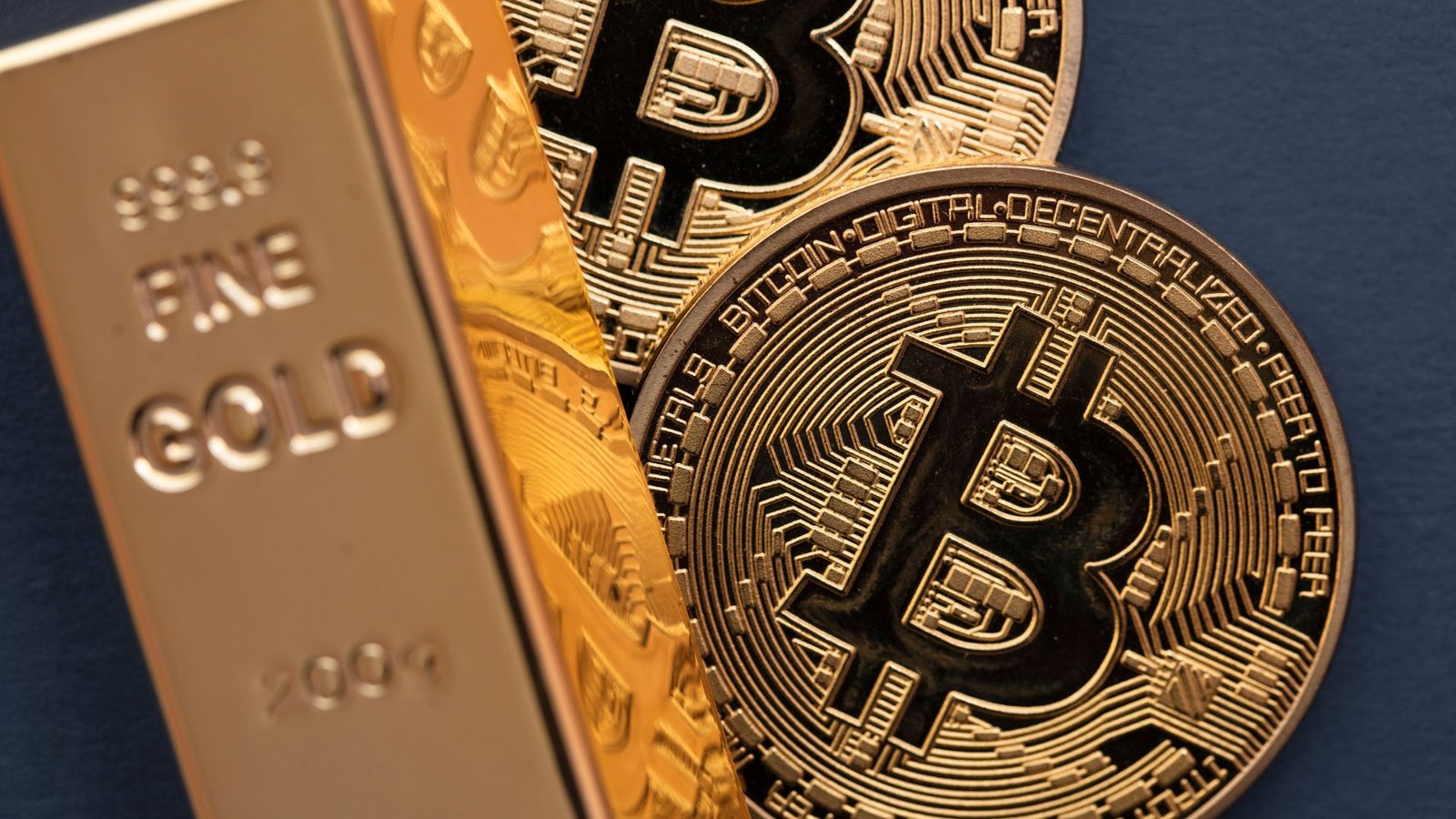
Bitcoin, now a household name, was a mysterious digital asset a decade ago. For those who bought Bitcoin in 2013, the returns have been nothing short of phenomenal. Many financial analysts and early adopters have compared buying Bitcoin in its early days to buying gold in 1000 BC, an analogy that emphasizes the sheer value of being among the first to acquire an asset that would later be widely accepted as a store of value. In this blog post, we will delve into this analogy, explore how Bitcoin’s early stages mirror the historical rise of gold, and understand why the potential of blockchain technology is still largely untapped, presenting excellent investment opportunities.
The Gold Analogy: What Makes Bitcoin Similar to Gold in 1000 BC?
To understand the comparison between Bitcoin in 2013 and gold in 1000 BC, we must first appreciate the historical context of gold. Around 1000 BC, gold was not widely used as a currency, but it was already valued for its rarity, beauty, and utility in trade. Gold gradually became an accepted medium of exchange, a store of value, and ultimately a universal currency that retained value through centuries of economic shifts. The concept of gold as a hedge against inflation and a safe-haven asset emerged over time, as human societies recognized its intrinsic worth.
Bitcoin in 2013 shared a similar trajectory. At that point, Bitcoin had started gaining traction among tech enthusiasts and early adopters, but it was far from being recognized by the mainstream financial industry. It was a speculative asset, often viewed with skepticism, and many people failed to understand its potential as a store of value. However, for those who had the foresight to recognize Bitcoin’s unique properties—decentralization, limited supply, and potential for global usage—it represented an opportunity much like gold did in its nascent stages.
The Evolution of Bitcoin: From 2013 to Today
In 2013, Bitcoin was priced at around $100-$1,000, depending on the time of the year. This was a period when Bitcoin had just begun to gain attention, driven by early media coverage and increasing awareness of blockchain technology. Fast forward to today, Bitcoin’s value has skyrocketed, surpassing $100,000 and becoming a significant player in the global financial system. But what drove this monumental increase in value?
- Limited Supply and Increased Demand: Much like gold, Bitcoin has a limited supply. There will only ever be 21 million bitcoins, making it inherently deflationary. The principle of supply and demand suggests that as more people become interested in Bitcoin, its price will continue to rise. The limited supply of Bitcoin provides a hedge against inflation, much like gold does. In 2013, very few people understood this concept, but those who did found themselves positioned to reap the rewards.
- Mainstream Adoption: Over the past decade, Bitcoin has seen increasing acceptance from both institutional investors and the general public. In 2013, Bitcoin was largely limited to niche forums and tech enthusiasts, but today it is widely accepted by financial institutions, corporations, and even governments. Companies like Tesla, MicroStrategy, and PayPal have integrated Bitcoin into their operations or balance sheets, providing a stamp of legitimacy that was unimaginable a decade ago.
- Technological Advancements: Bitcoin’s underlying blockchain technology has proven its robustness and utility over the years. In 2013, blockchain was a concept that most people did not understand, but today it underpins not only Bitcoin but also a wide range of applications, from decentralized finance (DeFi) to smart contracts. The evolution of blockchain technology has added layers of utility to Bitcoin, enhancing its status as “digital gold.”
Why Investing in Bitcoin Now is Still Like Buying Gold Early
Although Bitcoin is no longer priced at the $100 mark like it was in 2013, the current state of blockchain technology and cryptocurrency adoption is still in its early stages. Much like gold’s journey from an ornamental metal to a global currency, Bitcoin and blockchain are still evolving, and many experts believe that the true potential of these technologies has yet to be fully realized.
- Untapped Institutional Potential: While institutional adoption of Bitcoin has grown significantly, we are still at the beginning of what could be a massive influx of institutional money. Large pension funds, insurance companies, and even governments are slowly warming up to the idea of holding Bitcoin as part of their asset mix. As regulatory clarity improves, we can expect a surge of institutional investments that could propel Bitcoin’s value even further, much like how gold gained value as more institutions adopted it as a reserve asset.
- Technological and Financial Integration: Bitcoin is increasingly being integrated into the traditional financial system. Major payment processors, investment funds, and even central banks are beginning to see the value of Bitcoin and other cryptocurrencies as part of the financial ecosystem. This integration mirrors gold’s history, where it moved from being a luxury item to a core element of the global economy. With more infrastructure being built around Bitcoin, such as ETFs, derivatives, and payment solutions, the utility and demand for Bitcoin are only set to increase.
- Hedge Against Economic Uncertainty: One of the reasons gold became valuable was its ability to act as a hedge against economic uncertainty. Similarly, Bitcoin has proven itself as a hedge in times of economic instability. Throughout periods of market turbulence, Bitcoin has demonstrated resilience, and many investors now see it as a reliable hedge against inflation, currency devaluation, and geopolitical risk. In this way, Bitcoin’s value proposition as “digital gold” is becoming more pronounced, making it an attractive investment for those looking to protect their wealth.
- Scarcity and Digital Ownership: In the same way that gold’s rarity has driven its value, Bitcoin’s fixed supply is a major driver of its long-term value proposition. As more individuals and institutions recognize the importance of digital ownership in an increasingly online world, Bitcoin is positioned as the ultimate scarce digital asset. Buying Bitcoin today can be likened to purchasing a portion of the internet itself in the late 90s—a scarce piece of a growing digital infrastructure.
The Blockchain Revolution: More Than Just Bitcoin
The opportunity in blockchain technology extends far beyond Bitcoin. Blockchain is revolutionizing industries by offering new ways to transfer value, secure data, and create trust without intermediaries. From decentralized finance (DeFi) projects that allow users to access loans without traditional banks, to non-fungible tokens (NFTs) that are changing the art and entertainment industries, blockchain’s potential is vast.
Investing in Bitcoin now isn’t just about owning a digital asset; it’s about participating in a broader technological revolution. Blockchain projects are still in their early stages, and there is a wide range of opportunities for investors looking to get in early, much like the internet boom of the 1990s. As blockchain technology continues to evolve, the demand for Bitcoin as the foundational digital currency will likely grow, pushing its value even higher.
Risks and Rewards: What Investors Need to Consider
While the comparison between Bitcoin in 2013 and gold in 1000 BC highlights the immense potential for growth, it is also important to consider the risks. Cryptocurrencies are inherently volatile, and price swings can be significant. Regulatory risks also exist, as governments around the world continue to grapple with how to manage and regulate digital assets. Investors must consider their risk tolerance and be prepared for both short-term volatility and the potential for long-term gains.
However, the rewards of investing early in disruptive technologies like Bitcoin are substantial. Those who understood the importance of Bitcoin in 2013 have seen unparalleled returns, and those investing today still have the opportunity to benefit from Bitcoin’s continued growth and the expanding blockchain ecosystem.
Conclusion: The Gold of the Digital Age
Buying Bitcoin in 2013 was, indeed, like buying gold in 1000 BC—a time when the asset was undervalued and its true potential was not yet fully understood. Today, Bitcoin has proven itself as a valuable asset, and its journey is far from over. For investors, the opportunity to buy Bitcoin now is akin to acquiring an early stake in one of the most transformative technologies of our time.
The analogy to gold underscores the importance of recognizing value before the rest of the world catches on. Blockchain technology is still in its infancy, and Bitcoin remains at the forefront of this digital revolution. As institutional adoption grows, regulatory clarity improves, and new technologies emerge, the future for Bitcoin and blockchain looks incredibly promising.

